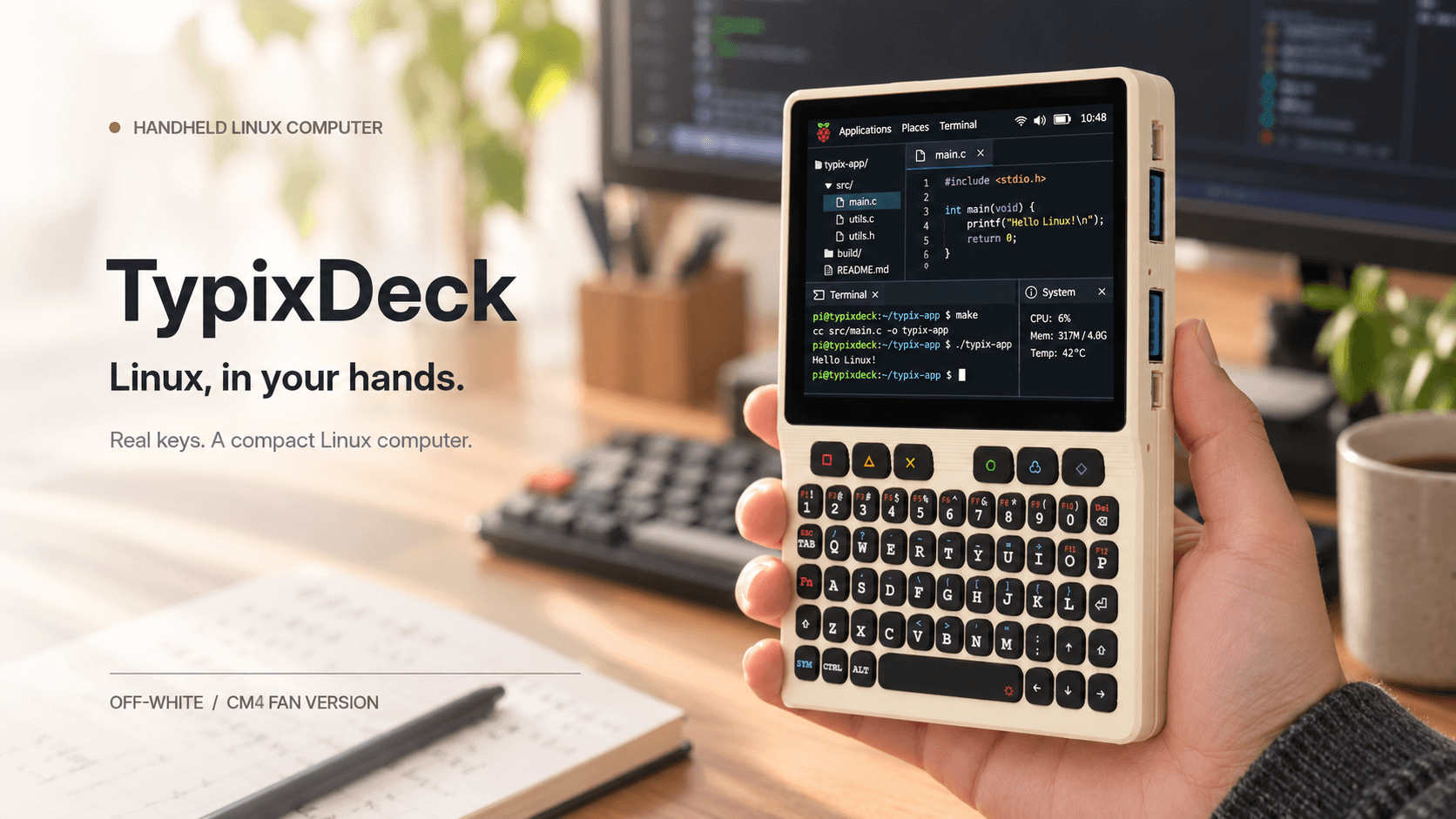
Picture a small computer on a desk.
Real keys. A screen that fits in your palm. A case you can open with a screwdriver.
You pick it up and imagine a use for it. A weekend build. A tool for field work. Something you would carry every day.
Then you ask a simple question: “Where can I get one?”
Now imagine looking through product photos, specifications, and scattered comments. You understand the idea. You still need to know what works today, which batch you would join, and when it might ship.
That scene captures the problem Rally is built around.
An original product can earn your attention in seconds. Deciding to buy it takes clear answers—and people who take responsibility for what happens next.
We are building Rally to bring those pieces together.
Why does Rally exist?
Because a useful idea can start with a small audience.
A developer may want a computer that fits in a pocket. A maker may need a tool that solves one awkward problem. Someone else may want a better place for the things on their desk.
These products deserve a chance to be understood by the people who could use them.
Rally brings the product, its maker, and those people into the same conversation. A scheduled Group Buy gives that conversation a practical next step.
What makes a product worth bringing here?
It should give someone a clear reason to care.
Perhaps it makes a familiar task easier. Perhaps it lets you build something you could not build before. Perhaps a small design choice makes it feel right in your hand.
We want to explain that reason in plain language. Show the product. Show what it does. Explain who it suits and what its limits are.
A long list of features is useful only when people can connect it to their own lives.
Why bring people together through Group Buying?
Making physical products requires decisions about materials, quantities, production, and delivery.
A scheduled Group Buy gathers demand around a specific batch. People can review its order window and expected shipping date before joining.
That shared schedule gives the work a defined shape. It helps the people involved discuss the same product and the same batch.
Price is part of the decision. So are shipping, tax, timing, and the terms that apply to the order. Buyers need to see those details before they pay.
Why keep the maker close?
Because the most useful answer often starts with “Here is why we built it that way.”
The maker can explain a material choice, a missing feature, or a trade-off in the design. Someone considering the product can describe the task they need it to handle.
Those details help people choose. They also give the maker something more useful than a view count: a clearer picture of how people expect to use the product.
We want room for specific questions, honest answers, and ideas for the next version.
What does PledgeBox do?
PledgeBox coordinates the work around the product, including reviewing project materials, organizing supply and delivery, and handling order support.
The maker brings product knowledge. PledgeBox brings an operating role that continues beyond the order window.
Our job is to make responsibilities clear. Buyers should know where to find updates, how to ask for help, and which terms apply to their order.
Does joining a batch mean the product is ready to ship?
It depends on the batch.
A working prototype is evidence that something works. It does not establish that the current batch has been produced, checked, packed, or shipped.
We need to explain the current stage and the work that remains. An expected shipping date is an estimate. If it changes, the update should explain what changed and what happens next.
People deserve enough information to decide whether the wait fits their needs.
What happens when something goes wrong?
Hardware can have faults. Production can slip. A shipment can arrive late.
The response should start with the facts: what happened, which orders are affected, and what action comes next.
We want support to stay connected to the order and the people responsible for it. Available options depend on the issue and the terms that apply.
Clear communication matters most when the news is difficult.
What kind of community do you want?
One that helps people make better choices and better products.
A useful question might prevent someone from buying the wrong tool. A photo of a real setup might show the maker a use they had not considered. A careful answer might help another person finish a project.
You can take part by asking, sharing what you learn, or offering a thoughtful suggestion. Buying a product is one way to participate.
Curiosity should have a place here too.
What will Rally stand for?
Make the product understandable. Show its purpose, its current state, and its limits.
Keep the maker within reach. Give practical questions room to become useful conversations.
Give every batch a clear schedule. Explain what is expected and update people when the plan changes.
State who is responsible. Keep support connected to the order after the sale.
Respect the decision to wait. People should have enough information to join, ask another question, or leave the product for another day.
Let real use guide the next version. Listen to what people build, fix, carry, and use.
Where does the story go from here?
Back to that small computer on the desk.
You can still turn it over in your hands. You can still wonder what you would build with it.
Now there is a place to meet the maker, understand the batch, and ask the questions that matter to you.
That is the Rally we want to build: original products, clear responsibilities, and people who help an idea move forward.
Bring your curiosity. Tell us what you would use. Ask the question the specification sheet did not answer.
The next useful thing may start with that conversation.